Girl Clothing Size Chart by Age: The Ultimate Guide to Finding the Perfect Fit

Finding the right clothes for a growing girl often feels like a moving target. One day she fits perfectly into her favorite toddler leggings, and the next, she has hit a sudden growth spurt that leaves her favorite outfits looking two sizes too small. If you have ever felt overwhelmed by labels like 4T, Size 6X, or Tween Medium, you are certainly not alone.
Understanding a girl clothing size chart by age is the most effective way to ensure the clothes you buy are comfortable, durable, and stylish. This guide is designed to take the guesswork out of the equation so you can shop with total confidence and avoid the hassle of constant returns.
Why Age is Just a Starting Point
I remember buying a “Size 6” birthday dress for my niece, Maya. Since she was turning six, it seemed like the most logical choice. However, Maya has always been tall for her age. When she finally put the dress on, it looked more like a long shirt than a gown. Meanwhile, her best friend, who is the same age but much more petite, would have been swimming in that exact same fabric.
The reality of children’s fashion is that age is merely a general suggestion used by manufacturers. To get a truly accurate fit, you must prioritize height and weight measurements over the number of candles on the birthday cake. Every child develops at their own pace, and a standard size chart is simply the baseline for that journey.
Understanding the Different Size Categories
Before diving into the specific numbers, it helps to understand how the industry categorizes girls’ apparel. Most major brands divide their collections into three specific developmental stages to better serve different body types.
Toddler (2T–5T): These sizes are tailored for the “active explorer” stage of life. The “T” stands for Toddler, and these garments are usually cut with extra room in the seat to accommodate diapers or pull-ups. They also tend to have easier fasteners for parents who are changing clothes on the go.
Little Girls (4–6X): This is a unique transitional phase in girls’ sizing. You might notice the specific Size 6X in many stores. This size is specifically designed to bridge the gap between “little” and “big” girl departments, providing a bit more length and width than a standard 6 without moving into the more mature cuts of the older sections.
Big Girls and Tweens (7–16): At this stage, clothing for girls becomes much more specialized. This is where you will start seeing options for slim, regular, and plus sizes. The cuts become more fitted and mimic adult styles while still maintaining the comfort needed for school and play.
A Step-by-Step Guide to Measuring Like a Professional
To use a girl clothing size chart by age effectively, you need a few key numbers. Instead of guessing, grab a flexible measuring tape and follow these simple steps to get the most accurate data.
Step 1: Measure Height
Have her stand barefoot against a flat wall with her heels touching the baseboard. Ensure she is looking straight ahead and standing tall. Place a flat object like a book on her head and mark the wall lightly. Measure from the floor to that mark. Height is the single most important factor for girls’ jumpsuits, rompers, and full-length dresses.
Step 2: Measure the Chest
Wrap the tape around the widest part of her chest, keeping it level and snug but not tight enough to restrict breathing. This measurement ensures that girls’ tops, blouses, and winter coats won’t pull uncomfortably across the shoulders or underarms.
Step 3: Measure the Natural Waist
Find the narrowest part of her torso, which is usually located just above the belly button. This is the natural waistline. This number is the key to finding the perfect fit for girls’ skirts, shorts, and high-waisted pants.
Step 4: Measure Hips and Seat
With her feet together, wrap the tape around the fullest part of her hips. This measurement is essential for denim jeans and athletic leggings to ensure they stay in place while she is running or jumping.
The Master Girl Clothing Size Chart by Age
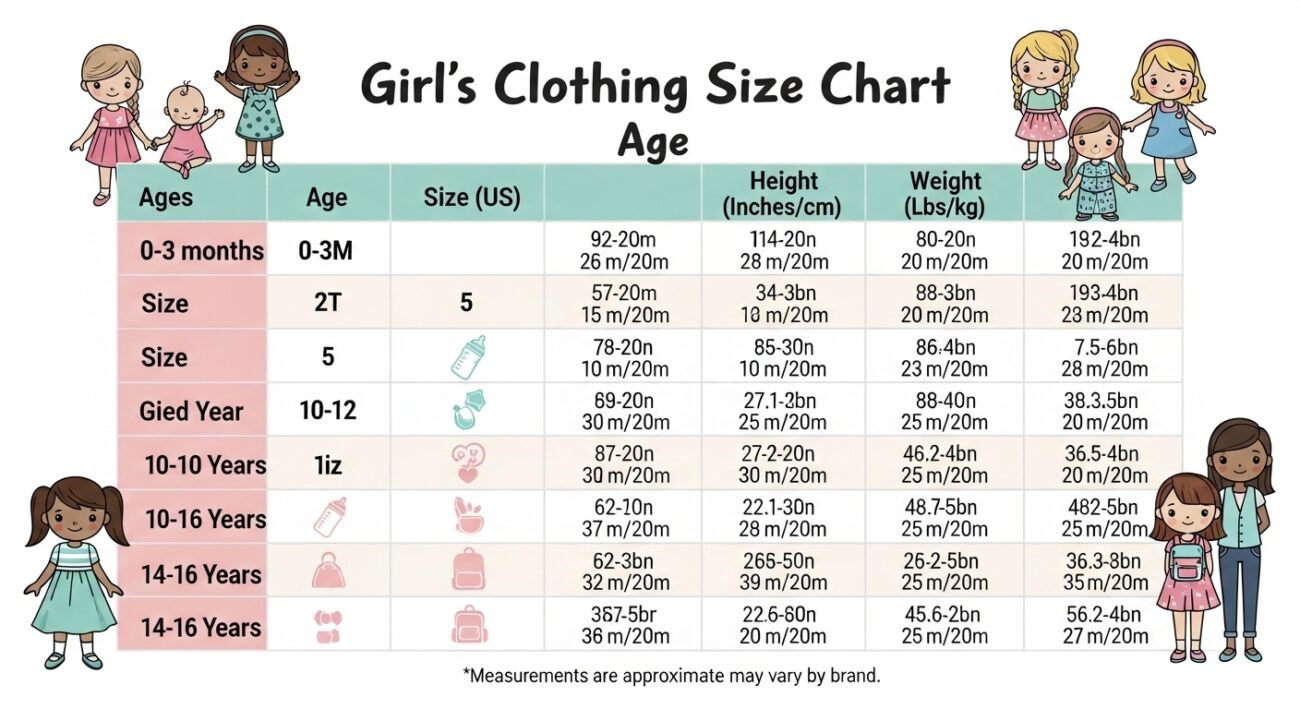
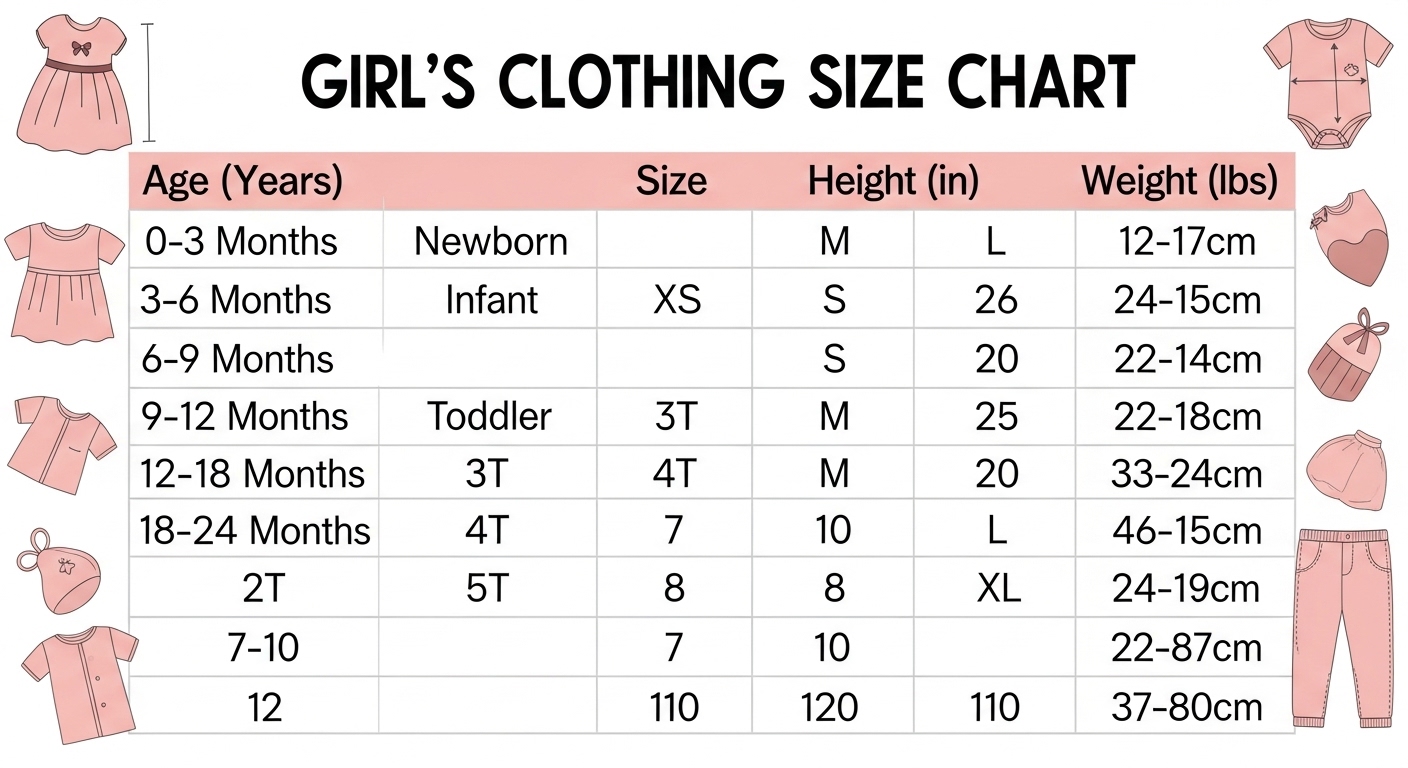
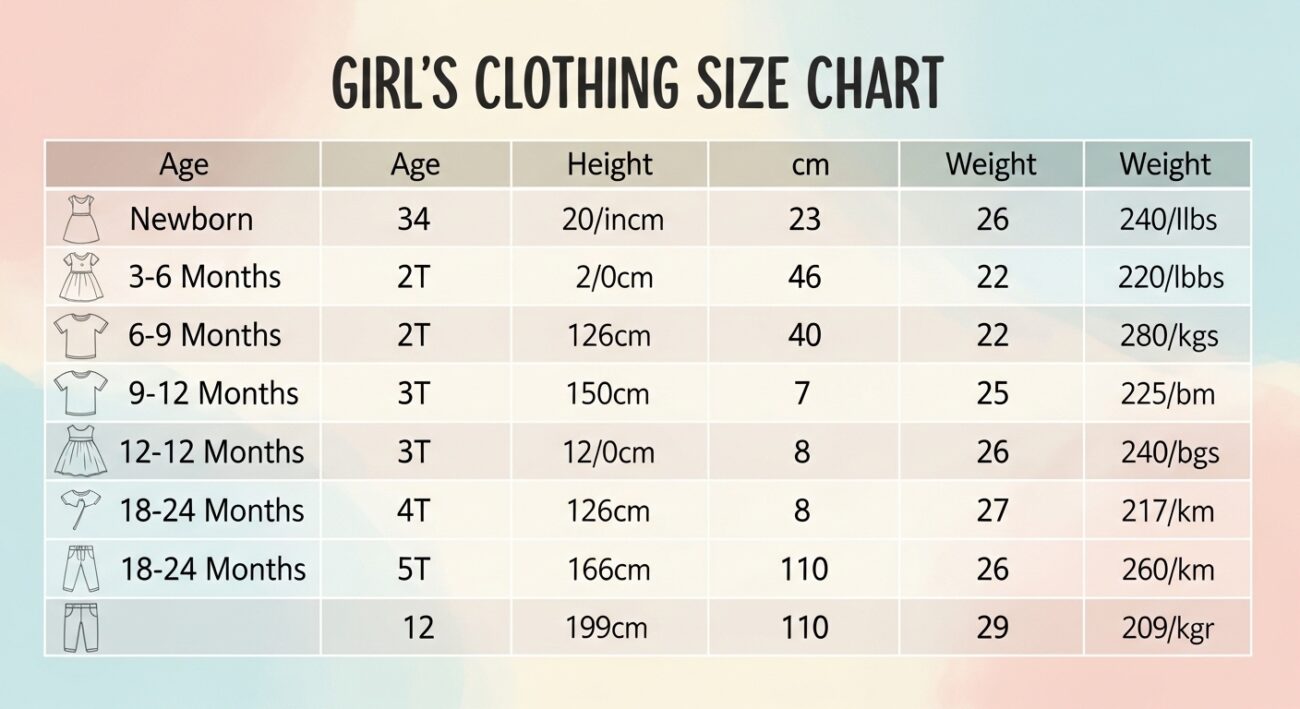
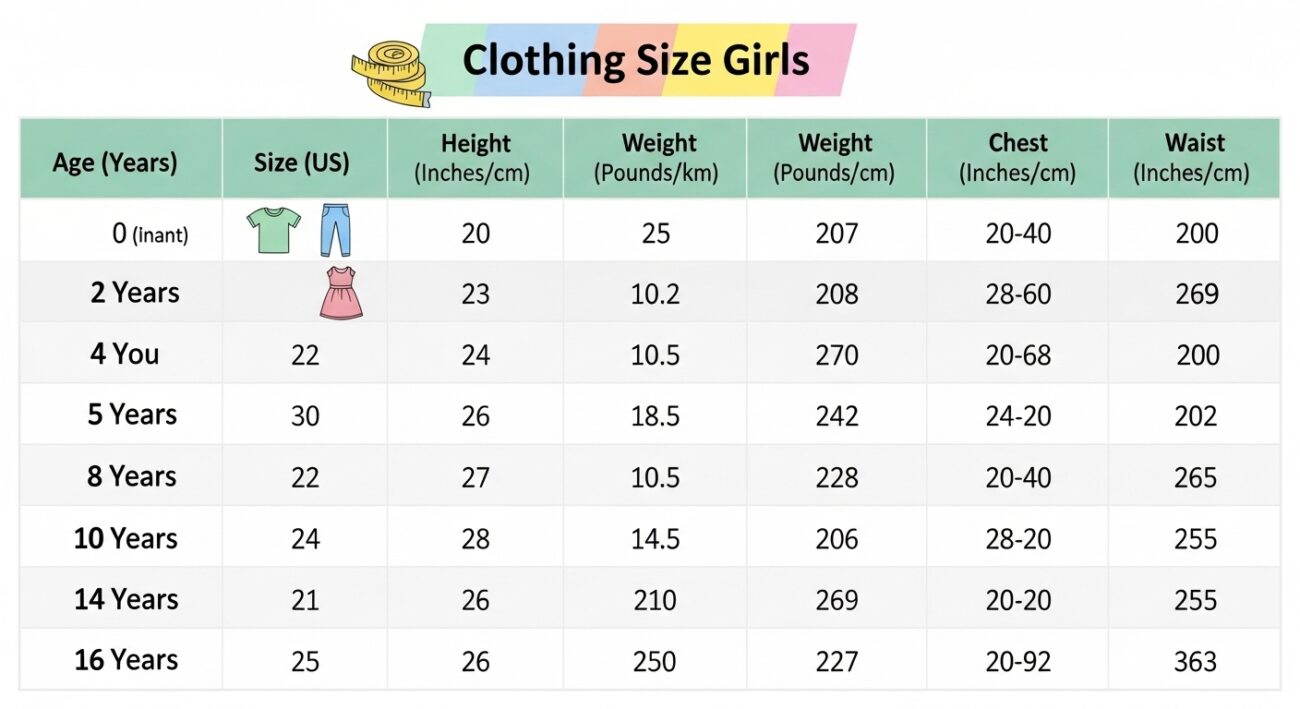
While every brand, from Gap Kids to Carter’s, has slight variations in their manufacturing, the following table represents the general industry standard for girls’ retail sizing.
| Age (Approx.) | Standard Size | Height (Inches) | Weight (lbs) | Waist (Inches) |
| 2 Years | 2T | 33″ – 35″ | 24 – 29 lbs | 20″ |
| 3 Years | 3T | 35″ – 38″ | 30 – 33 lbs | 20.5″ |
| 4 Years | 4T / 4 | 39″ – 41″ | 34 – 38 lbs | 21″ |
| 5 Years | 5T / 5 | 42″ – 44″ | 39 – 44 lbs | 21.5″ |
| 6 Years | 6 | 45″ – 46″ | 45 – 49 lbs | 22″ |
| 6-7 Years | 6X | 47″ – 48″ | 50 – 54 lbs | 22.5″ |
| 7-8 Years | 7 / Small | 49″ – 51″ | 55 – 60 lbs | 23″ |
| 8-9 Years | 8 / Small | 52″ – 54″ | 61 – 70 lbs | 24″ |
| 10 Years | 10 / Medium | 55″ – 57″ | 71 – 85 lbs | 25″ |
| 12 Years | 12 / Large | 58″ – 60″ | 86 – 95 lbs | 26″ |
| 14 Years | 14 / XL | 61″ – 62″ | 96 – 105 lbs | 27″ |
Decoding Alpha Sizes (S, M, L, XL)
As girls transition into the tween years, many retailers stop using numbers and switch to alpha sizing. This can be a major source of confusion for parents. Generally speaking, a Small covers the 7-8 range, a Medium typically fits a size 10, a Large is designed for size 12, and an Extra Large usually fits sizes 14-16.
When you are shopping for girls’ sportswear, be especially careful. These items are often designed with a “performance fit,” meaning they may feel tighter than everyday casual wear. If she prefers a more relaxed feel for her soccer or dance practice, it is often a good idea to consider sizing up.
Expert Tips for Smarter Shopping
Consider the Fabric Content: Always check the fiber content label. If a garment is made of 100% cotton, it is almost guaranteed to shrink in the wash. If her measurements are currently at the maximum end of a size range, choose the next size up to account for that inevitable shrinkage.
Look for Adjustable Waistbands: For girls who are tall and lean, finding pants that are long enough but don’t fall down can be a nightmare. Look for brands that offer internal elastic adjusters. This feature allows you to customize the waist fit while keeping the length she needs for her legs.
Embrace the Growth Buffer: When you are investing in winter coats or formal dresses, it is always better for the item to be slightly too large than too small. A little extra room allows for layering sweaters underneath and ensures the piece will still fit by the end of the season.
Conclusion: Shopping with Absolute Confidence
By using this girl clothing size chart by age as your primary reference, you can eliminate the stress of “will it fit?” and focus on the fun of helping her express her personality through fashion. Whether you are stocking up on back-to-school essentials or looking for that perfect holiday outfit, having her current measurements ready will guarantee a perfect fit every single time.